

CIC Free Exam Study Guide! (Updated 302 Questions)
CIC Dumps for Infection Control Certified Exam Questions and Answer
NEW QUESTION # 124
What rate is expressed by the number of patients who acquire infections over a specified time period divided by the population at risk of acquiring an infection during that time period?
- A. Point prevalence
- B. Disease specific
- C. Incidence rate
- D. Period prevalence
Answer: C
Explanation:
The incidence rate measures new cases of infection in a population over a defined time period using the formula:
Why the Other Options Are Incorrect?
* B. Disease specific - Refers to infections caused by a particular pathogen, not the general rate of new infections.
* C. Point prevalence - Measures existing cases at a specific point in time, not new cases.
* D. Period prevalence - Includes both old and new cases over a set period, unlike incidence, which only considers new cases.
CBIC Infection Control Reference
APIC defines incidence rate as the number of new infections in a population over a given period.
NEW QUESTION # 125
There has been an outbreak of foodborne illness in the community believed to be associated with attendance at a church festival. Which of the following is the MOST appropriate denominator for calculation of the attack rate?
- A. Residents in the county who attended the festival
- B. Dinners served at the festival
- C. People admitted to hospitals with gastrointestinal symptoms
- D. Admission tickets sold to the festival
Answer: A
Explanation:
The attack rate, a key epidemiological measure in outbreak investigations, is defined as the proportion of individuals who become ill after exposure to a suspected source, calculated as the number of cases divided by the population at risk. The Certification Board of Infection Control and Epidemiology (CBIC) emphasizes accurate outbreak analysis in the "Surveillance and Epidemiologic Investigation" domain, aligning with the Centers for Disease Control and Prevention (CDC) "Principles of Epidemiology in Public Health Practice" (3rd Edition, 2012). The question involves a foodborne illness outbreak linked to a church festival, requiring the selection of the most appropriate denominator to reflect the population at risk.
Option D, "Residents in the county who attended the festival," is the most appropriate denominator. The attack rate should be based on the total number of people exposed to the potential source of the outbreak (i.e., the festival), as this represents the population at risk for developing the foodborne illness. The CDC guidelines for foodborne outbreak investigations recommend using the number of attendees or participants as the denominator when the exposure is tied to a specific event, such as a festival. This approach accounts for all individuals who had the opportunity to consume the implicated food, providing a comprehensive measure of risk. Obtaining an accurate count of attendees may involve festival records, surveys, or estimates, but it directly reflects the exposed population.
Option A, "People admitted to hospitals with gastrointestinal symptoms," is incorrect as a denominator. This represents the number of cases (the numerator), not the total population at risk. Using cases as the denominator would invalidate the attack rate calculation, which requires a distinct population base. Option B,
"Admission tickets sold to the festival," could serve as a proxy for attendees if all ticket holders attended, but it may overestimate the at-risk population if some ticket holders did not participate or underestimate it if additional guests attended without tickets. The CDC advises using actual attendance data when available, making this less precise than Option D. Option C, "Dinners served at the festival," is a potential exposure- specific denominator if the illness is linked to a particular meal. However, without confirmation that all cases are tied to a single dinner event (e.g., a specific food item), this is too narrow and may exclude attendees who ate other foods or did not eat but were exposed (e.g., via cross-contamination), making it less appropriate than the broader attendee count.
The CBIC Practice Analysis (2022) and CDC guidelines stress the importance of defining the exposed population accurately for attack rate calculations in foodborne outbreaks. Option D best captures the population at risk associated with festival attendance, making it the most appropriate denominator.
References:
* CBIC Practice Analysis, 2022.
* CDC Principles of Epidemiology in Public Health Practice, 3rd Edition, 2012.
* CDC Guidelines for Foodborne Disease Outbreak Response, 2017.
NEW QUESTION # 126
In which of the following ways is human immunodeficiency virus similar to the Hepatitis B virus?
- A. The risk of infection from mucous membrane exposure is the same
- B. Needlestick exposure leads to a high frequency of healthcare worker infection
- C. The primary mechanism of transmission for both is maternal-fetal
- D. Transmission may occur from asymptomatic carriers
Answer: D
Explanation:
The human immunodeficiency virus (HIV) and Hepatitis B virus (HBV) are both bloodborne pathogens that pose significant risks in healthcare settings, and understanding their similarities is crucial for infection prevention and control. The Certification Board of Infection Control and Epidemiology (CBIC) emphasizes the importance of recognizing transmission modes and implementing appropriate precautions in the
"Prevention and Control of Infectious Diseases" domain, aligning with guidelines from the Centers for Disease Control and Prevention (CDC). Comparing these viruses involves evaluating their epidemiology, transmission routes, and occupational risks.
Option C, "Transmission may occur from asymptomatic carriers," is the correct answer. Both HIV and HBV can be transmitted by individuals who are infected but show no symptoms, making asymptomatic carriage a significant similarity. For HBV, chronic carriers (estimated at 257 million globally per WHO, 2019) can transmit the virus through blood, semen, or other bodily fluids without overt signs of disease. Similarly, HIV- infected individuals can remain asymptomatic for years during the latent phase, yet still transmit the virus through sexual contact, blood exposure, or perinatal transmission. The CDC's "Guidelines for Prevention of Transmission of HIV and HBV to Healthcare Workers" (1987, updated 2011) and "Epidemiology and Prevention of Viral Hepatitis" (2018) highlight this shared characteristic, underscoring the need for universal precautions regardless of symptom status.
Option A, "The primary mechanism of transmission for both is maternal-fetal," is incorrect. While maternal- fetal transmission (perinatal transmission) is a significant route for both HIV and HBV-occurring in 5-10% of cases without intervention for HBV and 15-45% for HIV without antiretroviral therapy-it is not the primary mechanism. For HBV, the primary mode is horizontal transmission through unprotected sexual contact or percutaneous exposure (e.g., needlesticks), accounting for the majority of cases. For HIV, sexual transmission and intravenous drug use are the leading modes globally, with maternal-fetal transmission being a smaller proportion despite its importance. Option B, "Needlestick exposure leads to a high frequency of healthcare worker infection," is partially true but not a precise similarity. Needlestick exposures carry a high risk for HBV (transmission risk ~30% if the source is HBeAg-positive) and a lower risk for HIV (~0.3%), but the frequency of infection among healthcare workers is significantly higher for HBV due to its greater infectivity and stability outside the host. This makes the statement more characteristic of HBV than a shared trait. Option D, "The risk of infection from mucous membrane exposure is the same," is false. The risk of HIV transmission via mucous membrane exposure (e.g., splash to eyes or mouth) is approximately 0.09%, while for HBV it is higher (up to 1-2% depending on viral load and exposure type), reflecting HBV's greater infectivity.
The CBIC Practice Analysis (2022) and CDC guidelines emphasize the role of asymptomatic transmission in shaping infection control strategies, such as routine testing and post-exposure prophylaxis. This shared feature of HIV and HBV justifies Option C as the most accurate similarity.
References:
* CBIC Practice Analysis, 2022.
* CDC Guidelines for Prevention of Transmission of HIV and HBV to Healthcare Workers, 2011.
* CDC Epidemiology and Prevention of Viral Hepatitis, 2018.
* WHO Hepatitis B Fact Sheet, 2019.
NEW QUESTION # 127
At a facility with 10.000 employees. 5,000 are at risk for bloodbome pathogen exposure. Over the past five years, 100 of the 250 needlestick injuries involved exposure to bloodborne pathogens, and 2% of exposed employees seroconverted. How many employees became infected?
- A. 0
- B. 1
- C. 2
- D. 3
Answer: B
Explanation:
To determine the number of employees who seroconverted (became infected) after a needlestick exposure, we use the given data:
Total Needlestick Injuries: 250
Needlestick Injuries Involving Bloodborne Pathogens: 100
Seroconversion Rate: 2%
Calculation:
Why Other Options Are Incorrect:
A). 1: Incorrect calculation; 2% of 100 is 2, not 1.
C). 5: Overestimates the actual number of infections.
D). 10: Exceeds the calculated value based on given data.
CBIC Infection Control References:
APIC Text, "Occupational Exposure and Seroconversion Risks".
APIC Text, "Bloodborne Pathogens and Needlestick Injury Prevention"
NEW QUESTION # 128
An infection preventionist (IP) is informed of a measles outbreak in a nearby community. What is the IP's FIRST priority when working with Occupational Health?
- A. Set up a mandatory vaccination clinic in collaboration with Occupational Health and local public health partners.
- B. Isolate employees who have recently traveled to areas with measles outbreaks.
- C. Reassign employees who are pregnant from caring for patients with suspected measles.
- D. Verify that employees in high-risk exposure areas of the facility have adequate immunity to measles.
Answer: D
Explanation:
When an infection preventionist (IP) is informed of a measles outbreak in a nearby community, the immediate priority is to protect healthcare workers and patients from potential exposure, particularly in a healthcare setting where vulnerable populations are present. Working with Occupational Health, the IP must follow a structured approach to mitigate the risk of transmission, guided by principles from the Certification Board of Infection Control and Epidemiology (CBIC) and public health guidelines. Let's evaluate each option to determine the first priority:
* A. Isolate employees who have recently traveled to areas with measles outbreaks: Isolating employees who may have been exposed to measles during travel is an important infection control measure to prevent transmission within the facility. However, this action assumes that exposure has already occurred and requires identification of affected employees first. Without knowing the immunity status of the workforce, this step is reactive rather than preventive and cannot be the first priority.
* B. Reassign employees who are pregnant from caring for patients with suspected measles: Reassigning pregnant employees is a protective measure due to the severe risks measles poses to fetuses (e.g., congenital rubella syndrome risks, though measles itself is more about maternal complications). This action is specific to a subset of employees and depends on identifying patients with suspected measles, which may not yet be confirmed. It is a secondary step that follows assessing overall immunity and exposure risks, making it inappropriate as the first priority.
* C. Verify that employees in high-risk exposure areas of the facility have adequate immunity to measles:
Verifying immunity is the foundational step in preventing measles transmission in a healthcare setting.
Measles is highly contagious, and healthcare workers in high-risk areas (e.g., emergency departments, pediatric wards) are at increased risk of exposure. The CBIC and CDC recommend ensuring that all healthcare personnel have documented evidence of measles immunity (e.g., two doses of MMR vaccine, laboratory evidence of immunity, or prior infection) as a primary infection control strategy during outbreaks. This step allows the IP to identify vulnerable employees, implement targeted interventions, and comply with occupational health regulations. It is the most proactive and immediate priority when an outbreak is reported in the community.
* D. Set up a mandatory vaccination clinic in collaboration with Occupational Health and local public health partners: Establishing a vaccination clinic is a critical long-term strategy to increase immunity and control the outbreak. However, this requires planning, resource allocation, and coordination, which take time. It is a subsequent step that follows verifying immunity status to identify those who need vaccination. While important, it cannot be the first priority due to its logistical demands.
The first priority is C, as verifying immunity among employees in high-risk areas establishes a baseline to prevent transmission before reactive measures (e.g., isolation, reassignment) or broader interventions (e.g., vaccination clinics) are implemented. This aligns with CBIC's focus on proactive risk assessment and occupational health safety during infectious disease outbreaks, ensuring a rapid response to protect the healthcare workforce and patients.
References:
* CBIC Infection Prevention and Control (IPC) Core Competency Model (updated 2023), Domain III:
Prevention and Control of Infectious Diseases, which prioritizes immunity verification during outbreaks.
* CBIC Examination Content Outline, Domain IV: Environment of Care, which includes ensuring employee immunity as part of outbreak preparedness.
* CDC Guidelines for Measles Prevention (2023), which recommend verifying healthcare worker immunity as the initial step during a measles outbreak.
NEW QUESTION # 129
An infection preventionist is reviewing a wound culture result on a surgery patient. The abdominal wound culture of purulent drainage grew Staphylococcus aureus with the following sensitivity pattern: resistant to penicillin, oxacillin, cephalothin, and erythromycin; susceptible to clindamycin, and vancomycin. The patient is currently being treated with cefazolin. Which of the following is true?
- A. Droplet Precautions should be initiated.
- B. The current therapy is not effective.
- C. This is a methicillin-sensitive S. aureus (MSSA) strain.
- D. The wound is not infected.
Answer: B
Explanation:
The scenario involves a surgical patient with a purulent abdominal wound culture growing Staphylococcus aureus, a common pathogen in surgical site infections (SSIs). The Certification Board of Infection Control and Epidemiology (CBIC) emphasizes accurate interpretation of culture results and antibiotic therapy in the
"Identification of Infectious Disease Processes" and "Prevention and Control of Infectious Diseases" domains, aligning with the Centers for Disease Control and Prevention (CDC) guidelines for managing SSIs. The question requires assessing the sensitivity pattern and current treatment to determine the correct statement.
Option B, "The current therapy is not effective," is true. The wound culture shows Staphylococcus aureus resistant to oxacillin, indicating methicillin-resistant S. aureus (MRSA). The sensitivity pattern lists resistance to penicillin, oxacillin, cephalothin, and erythromycin, with susceptibility to clindamycin and vancomycin.
Cefazolin, a first-generation cephalosporin, is ineffective against MRSA because resistance to oxacillin (a penicillinase-resistant penicillin) implies cross-resistance to cephalosporins like cefazolin due to altered penicillin-binding proteins (PBPs). The CDC's "Guidelines for the Prevention of Surgical Site Infections" (2017) and the Clinical and Laboratory Standards Institute (CLSI) standards confirm that MRSA strains are not susceptible to cefazolin, meaning the current therapy is inappropriate and unlikely to resolve the infection, supporting Option B.
Option A, "The wound is not infected," is incorrect. The presence of purulent drainage, a clinical sign of infection, combined with a positive culture for S. aureus, confirms an active wound infection. The CBIC and CDC define purulent discharge as a key indicator of SSI, ruling out this statement. Option C, "Droplet Precautions should be initiated," is not applicable. Droplet Precautions are recommended for pathogens transmitted via respiratory droplets (e.g., influenza, pertussis), not for S. aureus, which is primarily spread by contact. The CDC's "Guideline for Isolation Precautions" (2007) specifies Contact Precautions for MRSA, not Droplet Precautions, making this false. Option D, "This is a methicillin-sensitive S. aureus (MSSA) strain," is incorrect. Methicillin sensitivity is determined by susceptibility to oxacillin, and the resistance to oxacillin in the culture result classifies this as MRSA, not MSSA. The CDC and CLSI use oxacillin resistance as the defining criterion for MRSA.
The CBIC Practice Analysis (2022) and CDC guidelines stress the importance of aligning antimicrobial therapy with sensitivity patterns to optimize treatment outcomes. The mismatch between cefazolin and the MRSA sensitivity profile confirms that Option B is the correct statement, indicating ineffective current therapy.
References:
* CBIC Practice Analysis, 2022.
* CDC Guidelines for the Prevention of Surgical Site Infections, 2017.
* CDC Guideline for Isolation Precautions, 2007.
* CLSI Performance Standards for Antimicrobial Susceptibility Testing, 2022.
NEW QUESTION # 130
During the last week in June, an emergency department log reveals numerous cases of profuse watery diarrhea in individuals 74 years of age and older. During the same time period, four immunocompromised patients were admitted with possible Cryptosporidium. Which of the following actions should the infection preventionist take FIKST?
- A. Contact the laboratory to confirm stool identification results
- B. Characterize the outbreak by person, place, and time
- C. Form a tentative hypothesis about the potential reservoir for this outbreak
- D. Increase surveillance facility wide for additional cases
Answer: B
Explanation:
When an outbreak of infectious disease is suspected, the first step is to conduct an epidemiologic investigation. This begins with characterizing the outbreak by person, place, and time to establish patterns and trends. This approach, known as descriptive epidemiology, provides critical insights into potential sources and transmission patterns.
Step-by-Step Justification:
* Identify Cases and Patterns:
* The infection preventionist should analyze patient demographics (person), locations of cases (place), and onset of symptoms (time). This helps in defining the outbreak scope and potential exposure sources.
* Create an Epidemic Curve:
* An epidemic curve helps determine whether the outbreak is a point-source or propagated event.
This can indicate whether the infection is spreading person-to-person or originating from a common source.
* Compare with Baseline Data:
* Reviewing historical data ensures that the observed cases exceed the expected norm, confirming an outbreak.
* Guide Further Investigation:
* Establishing basic epidemiologic patterns guides subsequent actions, such as laboratory testing, environmental sampling, and surveillance.
Why Other Options Are Incorrect:
* B. Increase surveillance facility-wide for additional cases:
* While enhanced surveillance is important, it should follow the initial characterization of the outbreak. Surveillance without a defined case profile may lead to misclassification and misinterpretation.
* C. Contact the laboratory to confirm stool identification results:
* Confirming lab results is essential but comes after defining the outbreak's characteristics. Without an epidemiologic link, testing may yield results that are difficult to interpret.
* D. Form a tentative hypothesis about the potential reservoir for this outbreak:
* Hypothesis generation occurs after sufficient epidemiologic data have been collected. Jumping to conclusions without characterization may result in incorrect assumptions and ineffective control measures.
CBIC Infection Control References:
* APIC Text, "Outbreak Investigations," Epidemiology, Surveillance, Performance, and Patient Safety Measures.
* APIC/JCR Infection Prevention and Control Workbook, Chapter 4, Surveillance Program.
* APIC Text, "Investigating Infectious Disease Outbreaks," Guidelines for Epidemic Curve Analysis.
NEW QUESTION # 131
An infection preventionist (IP) is asked to assist in rewriting policies for insertion and maintenance of IV catheters. Which of the following are acceptable for use in site preparation?
- A. Benzalkonium chloride or chlorhexidine
- B. Chloroxylenol or acetone
- C. Alcohol or chlorhexidine
- D. Povidone-iodine or para-chloro-meta-xylenol (PCMX)
Answer: C
Explanation:
For IV catheter insertion, evidence-based guidance recommends preparing skin with an effective antiseptic agent to reduce skin flora at the insertion site and lower catheter-related infection risk. CDC guidance for prevention of intravascular catheter-related infections specifies that clean skin should be prepared with >0.5% chlorhexidine (CHG) in alcohol for central venous catheter and peripheral arterial catheter insertion and during dressing changes. If CHG is contraindicated, CDC lists tincture of iodine, an iodophor, or 70% alcohol as acceptable alternatives.
Option C (Alcohol or chlorhexidine) is the only answer in which both agents are recognized as appropriate antiseptics for site preparation in intravascular catheter guidance (alcohol as an acceptable antiseptic option; CHG as preferred, typically in alcohol).
The other choices include agents that are not recommended as standard site-prep antiseptics for catheter insertion in major guidelines: acetone is not an antiseptic for vascular access site prep; benzalkonium chloride is generally considered less effective for this purpose compared with CHG/alcohol/iodophors; and PCMX/chloroxylenol is not the typical recommended agent for catheter insertion site antisepsis in these guidelines.
NEW QUESTION # 132
Which of the following statements characterizes the proper use of chemical disinfectants?
- A. The label on the solution being used must indicate that it kills all viable micro-organisms.
- B. A chemical indicator must be used with items undergoing high-level disinfection.
- C. The solution should be adaptable for use as an antiseptic.
- D. All items to be processed must be cleaned prior to being submerged in solution.
Answer: D
Explanation:
The proper use of chemical disinfectants is a critical aspect of infection control, as outlined by the Certification Board of Infection Control and Epidemiology (CBIC). Chemical disinfectants are used to eliminate or reduce pathogenic microorganisms on inanimate objects, and their effective application requires adherence to specific protocols to ensure safety and efficacy. Let's evaluate each option based on infection control standards:
* A. All items to be processed must be cleaned prior to being submerged in solution.: This statement is a fundamental principle of disinfectant use. Cleaning (e.g., removing organic material such as blood, tissue, or dirt) is a prerequisite before disinfection because organic matter can inactivate or reduce the effectiveness of chemical disinfectants. The CBIC emphasizes that proper cleaning is the first step in the disinfection process to ensure that disinfectants can reach and kill microorganisms. This step is universally required for all levels of disinfection (low, intermediate, and high), making it a characterizing feature of proper use.
* B. The label on the solution being used must indicate that it kills all viable micro-organisms.: This statement is misleading. No disinfectant can be guaranteed to kill 100% ofall viable microorganisms under all conditions, as efficacy depends on factors like contact time, concentration, and the presence of organic material. Disinfectant labels typically indicate the types of microorganisms (e.g., bacteria, viruses, fungi) and the level of disinfection (e.g., high-level, intermediate-level) they are effective against, based on standardized tests (e.g., EPA or FDA guidelines). Claiming that a solution kills all viable microorganisms is unrealistic and not a requirement for proper use; instead, the label must specify the intended use and efficacy, which varies by product.
* C. The solution should be adaptable for use as an antiseptic.: An antiseptic is a chemical agent used on living tissue (e.g., skin) to reduce microbial load, whereas a disinfectant is used on inanimate surfaces.
While some chemicals (e.g., alcohol) can serve both purposes, this is not a requirement for proper disinfectant use. The adaptability of a solution for antiseptic use is irrelevant to its classification or application as a disinfectant, which focuses on environmental or equipment decontamination. This statement does not characterize proper disinfectant use.
* D. A chemical indicator must be used with items undergoing high-level disinfection.: Chemical indicators (e.g., test strips or tapes) are used to verify that the disinfection process has met certain parameters (e.g., concentration or exposure time), particularly in sterilization or high-level disinfection (HLD). While this is a recommended practice for quality assurance in HLD (e.g., with glutaraldehyde or hydrogen peroxide), it is not a universal requirement for all chemical disinfectant use. HLD applies specifically to semi-critical items (e.g., endoscopes), and the need for indicators depends on the protocol and facility standards. This statement is too narrow and specific to characterize the proper use of chemical disinfectants broadly.
The correct answer is A, as cleaning prior to disinfection is a foundational and universally applicable step in the proper use of chemical disinfectants. This aligns with CBIC guidelines, which stress the importance of a clean surface to maximize disinfectant efficacy and prevent infection transmission in healthcare settings.
:
CBIC Infection Prevention and Control (IPC) Core Competency Model (updated 2023), Domain IV:
Environment of Care, which mandates cleaning as a prerequisite for effective disinfection.
CBIC Examination Content Outline, Domain III: Prevention and Control of Infectious Diseases, which includes protocols for the proper use of disinfectants, emphasizing pre-cleaning.
CDC Guidelines for Disinfection and Sterilization in Healthcare Facilities (2021), which reinforce that cleaning must precede disinfection to ensure efficacy.
NEW QUESTION # 133
There are four cases of ventilator-associated pneumonia in a surgical intensive care unit with a total of 200 ventilator days and a census of 12 patients. Which of the following BEST expresses how this should be reported?
- A. 20 ventilator-associated pneumonia cases/1000 ventilator days
- B. More information is needed regarding ventilator days per patient
- C. Ventilator-associated pneumonia rate of 2%
- D. Postoperative pneumonia rate of 6% in SICU patients
Answer: A
Explanation:
The standard way to report ventilator-associated pneumonia (VAP) rates is:
A white paper with black text AI-generated content may be incorrect.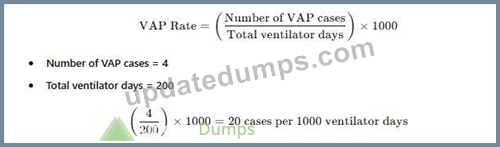
Why the Other Options Are Incorrect?
* A. Ventilator-associated pneumonia rate of 2% - This does not use the correct denominator (ventilator days).
* C. Postoperative pneumonia rate of 6% in SICU patients - Not relevant, as the data focuses on VAP, not postoperative pneumonia.
* D. More information is needed regarding ventilator days per patient - The total ventilator days are already provided, so no additional data is required.
CBIC Infection Control Reference
APIC and NHSN recommend reporting VAP rates as cases per 1,000 ventilator days.
NEW QUESTION # 134
Working with public health agencies to collect and analyze indicators that might signal an increase in community illness is an example of which type of surveillance?
- A. Targeted
- B. Syndromic
- C. Active
- D. Passive
Answer: B
Explanation:
Surveillance is a critical tool in infection prevention and control, used to monitor disease trends and guide public health responses. The Certification Board of Infection Control and Epidemiology (CBIC) emphasizes the "Surveillance and Epidemiologic Investigation" domain, which aligns with the Centers for Disease Control and Prevention (CDC) "Principles of Epidemiology in Public Health Practice" (3rd Edition, 2012).
The question describes a process of collecting and analyzing indicators to signal an increase in community illness, requiring identification of the appropriate surveillance type among the options provided.
Option C, "Syndromic," is the correct answer. Syndromic surveillance involves monitoring non-specific health indicators or symptoms (e.g., fever, respiratory complaints, or gastrointestinal issues) that may precede a formal diagnosis, aiming to detect potential outbreaks or increases in community illness early. The CDC defines syndromic surveillance as the real-time or near-real-time collection, analysis, and interpretation of health-related data to provide actionable information, often in collaboration with public health agencies. This approach uses data from sources like emergency department visits, over-the-counter medication sales, or absenteeism reports to identify trends before laboratory confirmation, making it well-suited to the described scenario of signaling community illness increases.
Option A, "Passive," involves healthcare providers or laboratories reporting cases to public health authorities on a voluntary or mandatory basis without active prompting (e.g., routine notifiable disease reporting). While passive surveillance contributes to baseline data, it is less proactive and not specifically designed to signal early increases in illness, making it less fitting. Option B, "Active," entails public health officials actively seeking data from healthcare facilities or providers (e.g., calling to confirm cases during an outbreak). This is more resource-intensive and typically used for specific investigations rather than ongoing community trend monitoring, which aligns better with syndromic methods. Option D, "Targeted," refers to surveillance focused on a specific population, disease, or event (e.g., monitoring TB in a high-risk group). The scenario's broad focus on community illness indicators does not suggest a targeted approach.
The CBIC Practice Analysis (2022) and CDC guidelines highlight syndromic surveillance as a key strategy for early detection of community-wide health threats, often involving collaboration with public health agencies. Option C best matches the described activity of analyzing indicators to signal illness increases, making it the correct choice.
References:
* CBIC Practice Analysis, 2022.
* CDC Principles of Epidemiology in Public Health Practice, 3rd Edition, 2012.
* CDC Syndromic Surveillance Systems, 2020.
NEW QUESTION # 135
Which of the following intravenous solutions will MOST likely promote the growth of microorganisms?
- A. 5% dextrose
- B. Synthetic amino acids
- C. 50% hypertonic glucose
- D. 10% lipid emulsions
Answer: D
Explanation:
10% lipid emulsions are the most likely to promote microbial growth because they provide an ideal environment for bacterial and fungal proliferation, especially Staphylococcus aureus, Pseudomonas aeruginosa, and Candida species. Lipids support rapid bacterial multiplication due to their high nutrient content.
Why the Other Options Are Incorrect?
* A. 50% hypertonic glucose - High glucose concentrations inhibit bacterial growth due to osmotic pressure effects.
* B. 5% dextrose - While it can support some bacterial growth, it is less favorable than lipid emulsions.
* C. Synthetic amino acids - These solutions do not support microbial growth as well as lipid emulsions.
CBIC Infection Control Reference
APIC guidelines confirm that lipid-based solutions support rapid microbial growth and should be handled with strict aseptic technique.
NEW QUESTION # 136
Which of the following is included in an effective respiratory hygiene program in healthcare facilities?
- A. Mask availability at building entrance and reception
- B. Separate entrance for symptomatic patients and visitors
- C. Community educational brochures campaign
- D. Temperature monitoring devices at clinical unit entrance
Answer: A
Explanation:
An effective respiratory hygiene program in healthcare facilities aims to reduce the transmission of respiratory pathogens, such as influenza, COVID-19, and other droplet- or airborne infectious agents, by promoting practices that minimize the spread from infected individuals. The Certification Board of Infection Control and Epidemiology (CBIC) emphasizes the importance of such programs within the "Prevention and Control of Infectious Diseases" domain, aligning with guidelines from the Centers for Disease Control and Prevention (CDC). The CDC's "Guideline for Isolation Precautions" (2007) and its respiratory hygiene/cough etiquette recommendations outline key components, including source control, education, and environmental measures to protect patients, visitors, and healthcare workers.
Option B, "Mask availability at building entrance and reception," is a core element of an effective respiratory hygiene program. Providing masks at entry points ensures that symptomatic individuals can cover their mouth and nose, reducing the dispersal of respiratory droplets. This practice, often referred to as source control, is a primary strategy to interrupt transmission, especially in high-traffic areas like entrances and receptions. The CDC recommends that healthcare facilities offer masks or tissues and no-touch receptacles for disposal as part of respiratory hygiene, making this a practical and essential inclusion.
Option A, "Community educational brochures campaign," is a valuable adjunct to raise awareness among the public about respiratory hygiene (e.g., covering coughs, hand washing). However, it is an external strategy rather than a direct component of the facility's internal program, which focuses on immediate action within the healthcare setting. Option C, "Separate entrance for symptomatic patients and visitors," can enhance infection control by segregating potentially infectious individuals, but it is not a universal requirement and depends on facility resources and design. The CDC suggests this as an optional measure during outbreaks, not a standard element of every respiratory hygiene program. Option D, "Temperature monitoring devices at clinical unit entrance," is a useful screening tool to identify febrile individuals, which may indicate infection.
However, it is a surveillance measure rather than a core hygiene practice, and its effectiveness is limited without accompanying interventions like masking.
The CBIC Practice Analysis (2022) and CDC guidelines prioritize actionable, facility-based interventions like mask provision to mitigate transmission risks. The availability of masks at key entry points directly supports the goal of respiratory hygiene by enabling immediate source control, making Option B the most appropriate answer.
References:
* CBIC Practice Analysis, 2022.
* CDC Guideline for Isolation Precautions: Preventing Transmission of Infectious Agents in Healthcare Settings, 2007.
NEW QUESTION # 137
Surgical site infection (SSI) data for the previous quarter reveal the following numbers. The surgeon with the highest infection rate is Doctor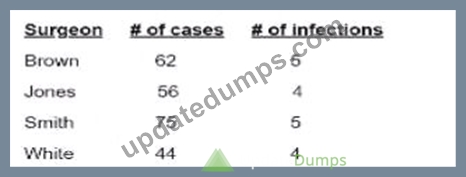
- A. White
- B. Smith
- C. Jones.
- D. Brown
Answer: A
Explanation:
To determine which surgeon has the highest surgical site infection (SSI) rate, use the following formula: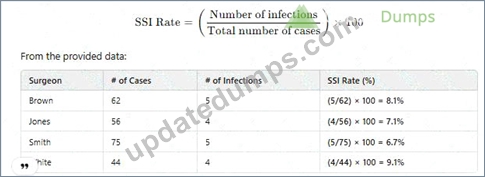
Since Dr. White has the highest SSI rate at 9.1%, the correct answer is D. White.
CBIC Infection Control Reference
SSI rates are calculated using infection count per total procedures and reported as percentage values.
NEW QUESTION # 138
Which of the following patients with human immunodeficiency virus infection requires Airborne precautions?
- A. 28-year-old female with Mycobacterium avium in sputum
- B. 46-year-old female with a cavitary lesion in upper lobe
- C. 24-year-old male newly diagnosed with a CD4 count of 70
- D. 36-year-old male with cryptococcal meningitis
Answer: B
Explanation:
HIV patients require Airborne Precautions if they have tuberculosis (TB). A cavitary lesion in the upper lobe is highly suggestive of active pulmonary TB, which requires Airborne Precautions due to aerosolized transmission.
Why the Other Options Are Incorrect?
* A. 24-year-old male newly diagnosed with a CD4 count of 70 - Low CD4 count alone does not warrant Airborne Precautions unless there is active TB or another airborne pathogen.
* B. 28-year-old female with Mycobacterium avium in sputum - Mycobacterium avium complex (MAC) is not airborne, and standard precautions are sufficient.
* C. 36-year-old male with cryptococcal meningitis - Cryptococcus neoformans is not transmitted via the airborne route, so Airborne Precautions are unnecessary.
CBIC Infection Control Reference
Patients with HIV and suspected TB require Airborne Precautions until TB is ruled out.
NEW QUESTION # 139
What is the MOST effective way an infection preventionist can assess readiness of emergency preparedness plans for an influx of patients with an emerging viral hemorrhagic fever?
- A. Collaborate with hospital stakeholders to assess the current availability of backup supplies of both staff and personal protective equipment
- B. Coordinate with hospital-based emergency management professionals and other incident command stakeholders to conduct a tabletop exercise or full-scale drill.
- C. Conduct regular rounding in the Emergency Department providing education and reviewing policies and procedures with frontline staff
- D. Meet frequently with emergency management professionals in the hospital and local public health authority.
Answer: B
Explanation:
The most effective way to assess emergency preparedness for an influx of patients with viral hemorrhagic fever (VHF) is through tabletop exercises or full-scale drills. These exercises simulate real-life scenarios, allowing hospitals to test protocols, identify weaknesses, and improve response efforts.
Why the Other Options Are Incorrect?
* A. Meet frequently with emergency management professionals - While important, meetings alone do not provide hands-on testing of preparedness.
* B. Conduct regular rounding in the Emergency Department - Rounding helps with policy compliance, but does not test the entire emergency response plan.
* D. Collaborate to assess the availability of supplies and PPE - This is one component of preparedness but does not evaluate the facility's response in real-time.
CBIC Infection Control Reference
APIC recommends full-scale emergency drills as the gold standard for assessing preparedness for emerging infectious diseases.
NEW QUESTION # 140
The infection preventionist and Occupational Health discuss the 65% influenza vaccination rate for healthcare personnel. Which is MOST effective method to increase compliance?
- A. Educate staff about risks of not receiving vaccine
- B. Require annual vaccine as a condition of employment
- C. Offer the vaccine year round to increase compliance
- D. Pre-schedule healthcare personnel for vaccine administration
Answer: B
Explanation:
Requiring influenza vaccination as acondition of employmenthas consistently been shown to be the most effective method to increase compliance among healthcare personnel.
* TheAPIC/JCR Workbookrecommends this as a gold standard:
"Some organizations have adopted policies requiring annual vaccination as a condition of employment unless medically contraindicated".
* CDC and APIC also support this method for maximizing coverage and protecting vulnerable populations.
References:
APIC/JCR Workbook, 4th Edition, Chapter 10 - Occupational Health Issues APIC Position Paper: Influenza Vaccination Should Be a Condition of Employment for Healthcare Personnel
NEW QUESTION # 141
A review of bronchoscopy specimens indicates an unusual number of Mycobacterium fortuitum-positive cultures. Which of the following observations would be the MOST likely cause of this finding?
- A. Bronchoscopes cleaned with sporicidal solution
- B. Drying with air or alcohol
- C. Rinsing with tap water
- D. Inadequate cleaning prior to disinfection
Answer: C
Explanation:
The CBIC Certified Infection Control Exam Study Guide (6th edition) identifies nontuberculous mycobacteria (NTM), including Mycobacterium fortuitum, as organisms commonly associated with water sources, particularly potable water systems. An unusual increase in M. fortuitum-positive bronchoscopy cultures is most often linked to waterborne contamination during endoscope reprocessing, making rinsing with tap water the most likely cause.
Tap water is not sterile and may harbor NTM, which are resistant to standard municipal water treatment and capable of forming biofilms within plumbing systems. If bronchoscopes are rinsed with tap water after high- level disinfection and not followed by appropriate sterile or filtered water rinses and thorough drying, organisms such as M. fortuitum may contaminate internal channels. This can lead to pseudo-outbreaks, where cultures are positive due to contamination rather than true patient infection.
Option B, inadequate cleaning prior to disinfection, can contribute to overall reprocessing failure but is less specifically associated with NTM contamination patterns. Option A is unlikely, as sporicidal solutions are effective disinfectants. Option D, drying with air or alcohol, is a recommended step to reduce microbial growth and would not cause contamination.
For CIC exam preparation, recognizing that tap water exposure during endoscope reprocessing is a classic source of nontuberculous mycobacteria contamination is a key concept in outbreak investigation and device reprocessing surveillance.
NEW QUESTION # 142
A patient with pertussis can be removed from Droplet Precautions after
- A. the patient has been given pertussis vaccine.
- B. direct fluorescent antibody and/or culture are negative.
- C. five days of appropriate antibiotic therapy.
- D. the paroxysmal stage has ended.
Answer: C
Explanation:
A patient with pertussis (whooping cough) should remain on Droplet Precautions to prevent transmission.
According to APIC guidelines, patients with pertussis can be removed from Droplet Precautions after completing at least five days of appropriate antimicrobial therapy and showing clinical improvement.
Why the Other Options Are Incorrect?
* A. Direct fluorescent antibody and/or culture are negative - Laboratory results may not always detect pertussis early, and false negatives can occur.
* C. The patient has been given pertussis vaccine - The vaccine prevents but does not treat pertussis, and it does not shorten the period of contagiousness.
* D. The paroxysmal stage has ended - The paroxysmal stage (severe coughing fits) can last weeks, but infectiousness decreases with antibiotics.
CBIC Infection Control Reference
According to APIC guidelines, Droplet Precautions should continue until the patient has received at least five days of antimicrobial therapy.
NEW QUESTION # 143
Respiratory tract flora are BEST characterized by which of the following statements?
- A. Both the upper and lower airways contain small numbers of organisms
- B. The upper airway is heavily colonized while the lower airway is not
- C. The airway is sterile below the larynx
- D. Both the upper and lower airways are sterile throughout
Answer: A
Explanation:
The respiratory tract flora refers to the microbial communities inhabiting the respiratory system, and understanding their distribution is essential for infection prevention and diagnosis. The Certification Board of Infection Control and Epidemiology (CBIC) highlights the importance of microbial ecology in the
"Identification of Infectious Disease Processes" domain, which aligns with the Centers for Disease Control and Prevention (CDC) and clinical microbiology principles. The question seeks the best characterization of respiratory tract flora, requiring an evaluation of current scientific understanding.
Option C, "Both the upper and lower airways contain small numbers of organisms," is the most accurate statement. The upper respiratory tract (e.g., nasal passages, pharynx) is naturally colonized by a diverse microbial community, including bacteria like Streptococcus, Staphylococcus, and Corynebacterium, as well as some fungi and viruses, acting as a first line of defense. The lower respiratory tract (e.g., trachea, bronchi, alveoli) was traditionally considered sterile due to mucociliary clearance and immune mechanisms. However, recent advances in molecular techniques (e.g., 16S rRNA sequencing) have revealed a low-biomass microbiome in the healthy lower airway, consisting of small numbers of organisms such as Prevotella and Veillonella, likely introduced via microaspiration from the upper tract. The CDC and studies in journals like the American Journal of Respiratory and Critical Care Medicine (e.g., Dickson et al., 2016) support this view, indicating that both regions contain microbial populations, though the lower airway's flora is less dense and more tightly regulated.
Option A, "The airway is sterile below the larynx," is outdated. While the lower airway was once thought to be sterile, modern research shows a sparse microbial presence, debunking this as a complete characterization.
Option B, "Both the upper and lower airways are sterile throughout," is incorrect. The upper airway is clearly colonized, and the lower airway, though low in microbial load, is not entirely sterile. Option D, "The upper airway is heavily colonized while the lower airway is not," overstates the contrast. The upper airway is indeed heavily colonized, but the lower airway is not sterile; it contains small numbers of organisms rather than being completely free of microbes.
The CBIC Practice Analysis (2022) and CDC guidelines on respiratory infections acknowledge the evolving understanding of respiratory flora, emphasizing that both upper and lower airways host small microbial populations in healthy individuals. Option C best reflects this balanced and evidence-based characterization.
References:
* CBIC Practice Analysis, 2022.
* Dickson, R. P., et al. (2016). The Microbiome and the Respiratory Tract. American Journal of Respiratory and Critical Care Medicine.
* CDC Principles of Epidemiology, 3rd Edition, 2012.
NEW QUESTION # 144
An immunocompetent patient is diagnosed with active tuberculosis (TB). Which of the following sites of the disease is MOST likely to result in transmission to healthcare personnel?
- A. Renal TB
- B. Tuberculous meningitis
- C. Laryngeal TB
- D. Miliary TB
Answer: C
Explanation:
Laryngeal tuberculosis (TB) is highly contagious because it involves the upper respiratory tract, leading to direct aerosolized transmission of Mycobacterium tuberculosis through talking, coughing, or sneezing.
Why the Other Options Are Incorrect?
* A. Renal TB - Genitourinary TB is not typically transmissible via airborne droplets.
* B. Miliary TB - While systemic, it does not involve direct respiratory transmission.
* D. Tuberculous meningitis - TB in the central nervous system is not spread through respiratory secretions.
CBIC Infection Control Reference
APIC confirms that laryngeal TB is one of the most infectious forms and requires Airborne Precautions
NEW QUESTION # 145
An outbreak of carbapenem-resistant Klebsiella pneumoniae is linked to duodenoscopes. What is the infection preventionist's PRIORITY intervention?
- A. Conduct whole-genome sequencing of outbreak isolates.
- B. Perform targeted patient screening for Klebsiella pneumoniae.
- C. Implement immediate enhanced reprocessing procedures and audit compliance.
- D. Discontinue the use of duodenoscopes until further notice.
Answer: C
Explanation:
* The CDC and FDA have identified duodenoscopes as high-risk devices due to inadequate reprocessing, leading to MDRO transmission.
* The first priority is enhancing reprocessing protocols and ensuring strict compliance with manufacturer instructions.
CBIC Infection Control References:
* APIC Text, "Endoscope Reprocessing and Infection Risk," Chapter 10.
NEW QUESTION # 146
......
Use Real CIC Dumps - 100% Free CIC Exam Dumps: https://www.updatedumps.com/CBIC/CIC-updated-exam-dumps.html
Realistic Verified CIC exam dumps Q&As - CIC Free Update: https://drive.google.com/open?id=1JhWuYfcRXEyfp2OW4FTj_ecNgIgkRbc1